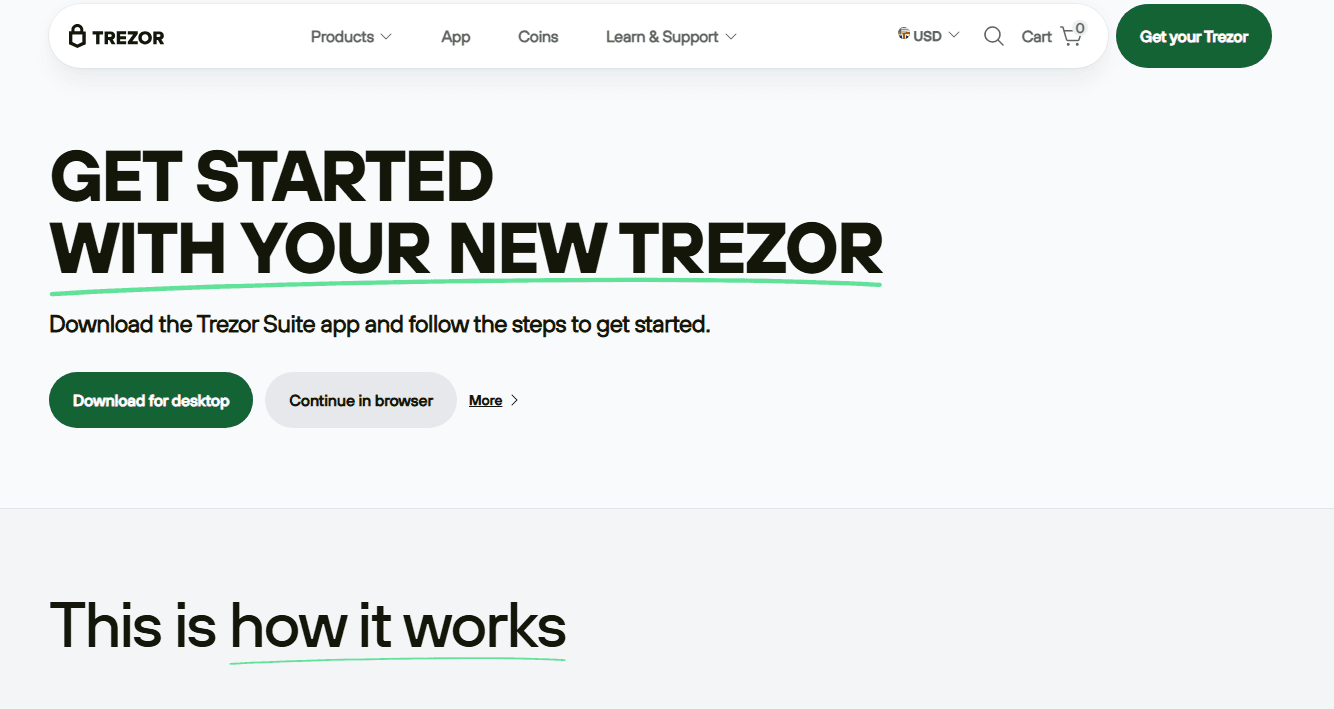
Trezor Login: A Complete 1200-Word Overview of Accessing Your Trezor Wallet Securely
Logging into a Trezor hardware wallet isn’t like signing into a regular online account. There is no email address to remember, no password to reset, and no server storing your login credentials. Instead, Trezor uses a unique physical authentication method that centers on your hardware device, your PIN, your recovery seed, and optional passphrase protection. This method is intentionally designed to give you complete personal control over your digital assets and to eliminate the vulnerabilities associated with online accounts.
This guide provides a fully fresh explanation of what Trezor login really means, how it functions, why it’s different, and what steps you follow to access and manage your crypto safely.
Why Trezor Login Isn’t a Traditional Login
When most people hear “login,” they imagine typing a username and password into a website. Trezor rejects this approach entirely. There is no Trezor account in the traditional sense, no central profile, and no storage of your authentication data on an external server.
Trezor’s login system is based on two fundamental principles:
1. The user must physically possess the device.
Your hardware wallet is the only place where private keys live. Without the device, no one can access your wallet, no matter what they know.
2. Authentication must happen offline.
Your PIN, passphrase, and approval of transactions occur entirely inside the hardware wallet, isolated from your computer and the internet.
These principles allow Trezor to protect your assets even if your computer is infected, compromised, or monitored.
What Happens During Trezor Login
Trezor login is a combination of several steps and verification layers. Each part adds its own security benefit.
Physical Connection
You begin by connecting your Trezor to your device using a USB cable. This step establishes a local communication channel with Trezor Suite, your desktop interface.
PIN Verification
Your device displays a scrambled keypad. You enter the PIN using your computer, but only the device shows the number positions. This randomized system prevents anyone from capturing your PIN through screen recording or keylogging.
Passphrase (Optional)
If you have enabled the advanced passphrase feature, you will be asked to enter it. This phrase acts as an extra “word” added to your seed phrase to create an additional, hidden wallet.
Device Confirmation
Once you've entered your login information, the device itself confirms your identity and unlocks your wallet inside Trezor Suite.
These combined elements make Trezor login strong enough to withstand both digital and physical threats.
Preparing for Your First Login
Before logging in for the first time, you need to set up your Trezor device. This initialization process is separate from the login process but is closely related to it. During setup, you:
Generate a recovery seed
Create a PIN
Install firmware
Configure basic settings
Optionally activate passphrase protection
These steps create the foundation your login system relies on. Once the setup is complete, your Trezor is ready for daily use.
Step-by-Step Trezor Login Walkthrough
Below is a simple but complete walkthrough of the login process from start to finish.
Step 1: Open Trezor Suite
Launch the Trezor Suite application on your computer. It serves as your dashboard for portfolio management, account creation, sending crypto, and viewing balances.
Step 2: Connect the Hardware Device
Use the provided cable to plug in your Trezor. The Suite interface will detect the device automatically.
Step 3: Unlock the Device with Your PIN
Your Trezor displays a grid of digits in random order. You will enter your PIN on your computer based on the positions shown on your device. Each login uses a different grid pattern, which keeps your PIN hidden from spyware or malicious tools running on your computer.
Step 4: Optional Passphrase Entry
If passphrase protection is enabled, Trezor Suite will prompt you to provide your passphrase. Trezor does not store this phrase, so it must be entered each time you access your hidden wallet.
Step 5: Access Granted
Once authenticated, the Suite unlocks your wallet. You can now:
See your crypto balances
Create new accounts
Send digital assets
Receive funds
Check transaction history
Manage multiple wallets
Perform security updates
The device must remain plugged in for sensitive actions, ensuring every important decision is physically confirmed.
What You Can Do After Logging In
Logging into Trezor gives you access to a wide range of tools through Trezor Suite. Here is what becomes available once your device is authenticated.
Monitor Your Portfolio
You can view your total holdings, daily changes, and distribution across different cryptocurrencies.
Send Crypto Safely
When sending funds, Trezor Suite shows a preview of the transaction, but the actual confirmation happens on your Trezor device screen. This protects you from malware that might attempt to substitute an address.
Receive Crypto
You can generate receiving addresses for incoming transfers. These addresses can be verified directly on the Trezor screen to ensure they are not manipulated.
Manage Accounts for Multiple Blockchains
Trezor supports a variety of cryptocurrencies. You can manage multiple accounts within Trezor Suite and switch back and forth between them with ease.
Update Firmware Securely
Firmware updates enhance your device's security and functionality. During these updates, you must approve changes on the device screen, ensuring that no unauthorized modifications take place.
Adjust Security Settings
You can change your PIN, enable discreet mode, adjust privacy preferences, or turn on passphrase protection.
Each of these tools is designed to keep your funds safe while giving you complete control.
The Role of the PIN in Trezor Login
The PIN is central to your Trezor login. Without it, the device remains locked and inaccessible. Trezor’s PIN system includes several protections:
Increasing delay: Each wrong attempt doubles the waiting time before retrying.
Data wipe: After too many failed attempts, the device resets to protect your crypto.
Scrambled keypad: Prevents observers or malware from learning your PIN.
Because of these properties, the PIN remains strong even if you use your Trezor on an unfamiliar or compromised computer.
The Passphrase: An Additional Layer of Login Security
A passphrase is a powerful optional feature that advanced users often enable. This extra phrase transforms your seed phrase into an entirely different wallet. Each passphrase creates a separate, private wallet:
A simple phrase might lead to one wallet
A longer, complex phrase could lead to a hidden wallet
An incorrect passphrase creates an empty wallet
This system provides flexibility and protection for users who want multiple layers of security, or who want to keep assets in different hidden accounts.
Common Issues During Trezor Login and How to Solve Them
The device isn’t recognized
Try another USB cable
Switch to another port
Restart Trezor Suite
Reboot your computer
Incorrect PIN entered multiple times
If you forget your PIN, the device will eventually reset after too many failed attempts. You can restore your wallet using your recovery seed.
Forgot passphrase
Passphrases cannot be recovered. Without the correct passphrase, the related wallet cannot be accessed. However, your original wallet (without passphrase) remains accessible using the seed phrase.
Address mismatch
Always rely on the device screen for address confirmation. If you see a mismatch, cancel the action immediately.
Why Trezor Login Is Considered Exceptionally Secure
The Trezor login system is resistant to many forms of attack because:
It doesn’t rely on passwords or cloud accounts
It requires physical access to the device
It verifies actions on a secure chip
It uses randomized PIN entry
It performs transaction approval offline
It gives users direct control over recovery mechanisms
These elements combine to make Trezor login one of the most trusted authentication systems in the cryptocurrency world.
Final Thoughts
The Trezor login process is simple in practice yet sophisticated in design. Instead of relying on online credentials, Trezor gives users full ownership of their digital assets through offline authentication, physical device verification, PIN protection, and optional passphrase layers. Once you understand how the login flow works, you gain both confidence and security in managing your cryptocurrency.
With Trezor login, you stay in full control—no intermediaries, no centralized accounts, no external servers. Just you, your device, and your secure access to the digital world.